
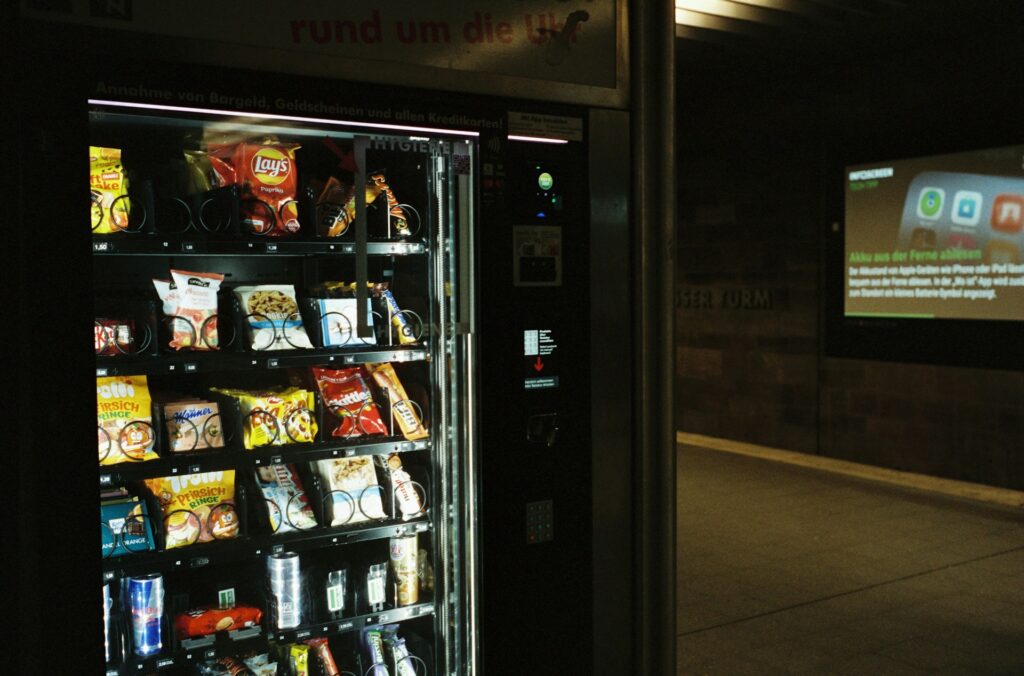
If there’s one thing Ghanaian entrepreneurs understand well, it’s the importance of multiple income streams. Smart vending machines tap directly into this mindset — offering a business model that’s scalable, flexible, and surprisingly efficient.
Let’s talk numbers (without getting boring).
Running a traditional retail shop involves rent, staff salaries, electricity, security, and daily supervision. A smart vending machine, on the other hand, operates with lower overhead, minimal staffing, and consistent uptime. Once installed in a high-traffic location, it becomes a silent salesperson that never sleeps, never takes breaks, and never calls in sick.
Location is everything — and Ghana has plenty of high-potential spots:
- University campuses
- Hospitals and clinics
- Corporate offices
- Residential estates
- Airports and transport hubs
- Gyms and recreational centers
- Events and pop-up spaces
Smart vending machines also allow operators to test products quickly. Want to know if protein bars sell better than pastries? Or whether cold drinks outperform snacks at night? The data tells the story instantly. This removes guesswork and helps business owners make smarter decisions backed by real numbers.
Another huge advantage? Payment flexibility. In a country where Mobile Money dominates everyday transactions, smart vending machines align perfectly with how people already pay. No cash? No problem. Scan, tap, collect, move on.
For young entrepreneurs, startups, and even established brands looking to expand distribution, smart vending machines aren’t just machines — they’re mini retail branches with powerful brains behind them.